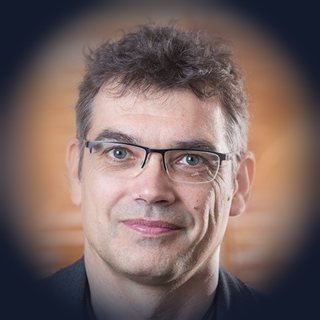
Keynote speaker
Jörg Herwanger
Sharp Reflections“Expect the Unexpected: Thermal Compaction and Fluid Softening in 4D Seismic Interpretation”
ConfirmedRock Physics and Beyond: From Pore to Production
Rock physics grows only when the lab and the field meet, often and in depth. For one full day in Sumedang, the Indonesian Rock Physics Society brings researchers and practitioners together, with our lab as host.
For one full day in Sumedang, the Indonesian Rock Physics Society brings researchers and practitioners together. Our lab is the host.
 DRPRS LabDigital Rock Physics & Remote Sensing
 iRocksIndonesian Rock Physics Society
 HAGIHimpunan Ahli Geofisika Indonesia
 Universitas PadjadjaranDepartment of Geophysics, FMIPA
Rock physics ties together seismic geophysics, well petrophysics, and lab measurements of rocks. Without a quantitative link between elastic, electrical, and transport properties, seismic interpretation loses its physical basis and formation evaluation loses precision.
In Indonesia, this expertise is spread thin. Modelling experts sit in a few universities. Practitioners who face the real problems every day work in different companies and rarely meet in a deep technical forum. Big conferences offer a stage, but seldom the time one topic needs.
iRocks fills that gap. The format is small, technical, and mixed: 30 minutes of talk, then 30 minutes of questions, so there is time for real discussion. The 2026 edition keeps this rhythm, grows the room from 40 to 100 people, and adds a visit to the DRPRS computing lab, so industry participants can see where the papers they read are made.
This year's theme, Rock Physics and Beyond: From Pore to Production, covers that whole span. A micron-wide pore throat mapped by micro-CT sets the permeability. Permeability sets how the reservoir drains. Years later, that drainage shows up, or fails to, as a change in the 4D seismic signal. The chain is usually broken, because different people work on each link and rarely meet.
"Beyond" points in three directions that are already everyday reality.
Neural surrogates now approximate in seconds what pore-scale simulation took days to compute. Machine learning is entering reservoir characterisation, but its physical basis and limits of validity are rarely discussed in the open.
4D seismic monitoring needs rock physics to explain effects it usually ignores, such as thermal compaction under cold-water injection and fluid softening under pressure drawdown.
Geologic hydrogen, carbon storage and geothermal all need rock physics for conditions that classic sandstone-and-oil correlations never covered.
From how we compute, to field use, to the energy questions of the next decade.
Line-up as of September 2026. The call for speakers is open. The final list comes with the second flyer.
“Expect the Unexpected: Thermal Compaction and Fluid Softening in 4D Seismic Interpretation”
Confirmed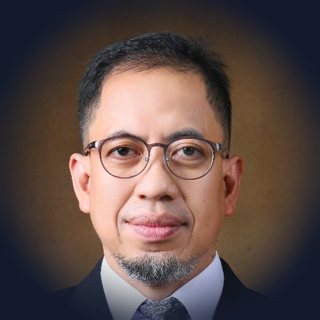
“Digital Rock Physics and Remote Sensing Laboratory: at a Glance”
Confirmed
“The Role and Challenges of Digital Rock Physics in Reservoir Characterization and Modeling”
Confirmed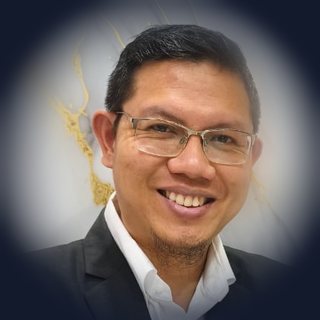
“Seismic Screening to Unlock New Potential Zone in Shaly Sand Reservoir Using Rock Physics Attribute”
Confirmed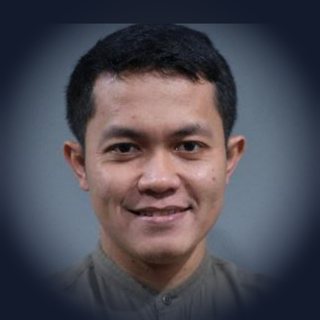
“From Atomic to Seismic through Machine Learning: Integrating Elemental Geochemistry and Geophysics for Shale Unconventional Reservoir Characterization”
Confirmed

“From Campus to Asset Team: Building Student Engagement with the Industry”
ConfirmedThis schedule is indicative until all speakers are confirmed in early October 2026.
Themes I, II and III. Keynote at 09.15.
Themes I, III and IV.
Panel and parallel session, closing and the lab visit.
Seats are limited to 200. Registration runs from 12 October to 12 November 2026.
S1 students do not register directly. Their Head of Study Program nominates and invites them. Everyone else secures a seat with the Rp 100,000 commitment fee, paid by 12 November 2026.
Key milestones for the 2nd iRocks Workshop 2026.
From the registered participant list of the 1st iRocks Workshop, not a projection.
Institutions in 2025 included Pertamina Hulu Rokan, Pertamina Hulu Energi, PHE OSES, PEPC, PIEP, Saka Energi, Medco E&P, APG Westkampar, Schlumberger, TGS, Elnusa, BGP Indonesia, Beicip-Franlab Asia, Sharp Reflections, GeoSoftware and Cegal, alongside Universitas Padjadjaran, Institut Teknologi Bandung, Universitas Indonesia and Institut Teknologi Sumatera. The President of HAGI, Dr. Ir. Dedi Yusmen, S.Si., M.BA., gave the opening remarks.
Rock physics is narrow and highly technical, so general advertising misses it. A room of 200 people who all work in it gives a precision a conference of thousands cannot match.
1complimentary seat
3complimentary seats
5complimentary seats
8complimentary seats
In-kind contributions are welcome and count at par with the matching tier. Venue, catering, speaker accommodation, seminar kits, lab visit transport, professional documentation, and software trial licences all help. All figures are indicative, and every package can be shaped to a partner's needs.
Commitments before 15 October 2026 appear on the second flyer and through the whole registration period, when exposure is highest.
The proposal gives the full tier entitlements, budget, governance, and deadlines.
Read the sponsorship proposal (English, PDF)Write referral code 07, then your company name, in the transfer description, so we can match the payment to this workshop at once. Send proof of transfer to drprs@geophys.unpad.ac.id for an official receipt.
The workshop and the lab visit are in the same building, so no travel is needed.
Talk to us about the 2026 edition
A short email is the fastest way. We will reply with the full proposal and set up a 30 minute call.
Email the organising committee